5 Best Sustainable Vegetal Proteins vs Animal Proteins?
The question “how sustainable are vegetal proteins compared to animal proteins” deserves evidence, not marketing slogans. This guide examines five leading vegetal proteins against meat, dairy, and eggs. It considers greenhouse-gas emissions, land use, water demand, nutrition, processing, and supply-chain reliability. Sustainability is never one number.
The Food and Agriculture Organization’s Pathways Towards Lower Emissions report estimates that global livestock agrifood systems produced about 6.2 gigatonnes of CO2-equivalent emissions in 2015, representing roughly 12% of human-caused emissions. Research published in Science by Poore and Nemecek found that many plant proteins create substantially lower emissions and use less land than beef, lamb, pork, or cheese. Peas, beans, lentils, soy, and mycoprotein can therefore offer meaningful environmental advantages.
But the comparison needs careful boundaries. A dry lentil shipment, a locally grown bean, and a highly processed meat alternative do not have identical footprints. The International Panel on Climate Change also warns that land, food systems, and dietary choices interact with local conditions. Water scarcity can change the picture. Fortification, packaging, and cooking energy matter too.
Real-world experience adds another complication. A product may be environmentally efficient yet fail because consumers dislike its texture or price. Some claims also rely on incomplete data. Imperfect evidence is still useful, but it should remain transparent. The following five protein choices are assessed with current industry research, life-cycle findings, and practical nutrition considerations. The goal is not to declare one universal winner. It is to identify where vegetal proteins genuinely perform better, and where animal proteins still require closer scrutiny.
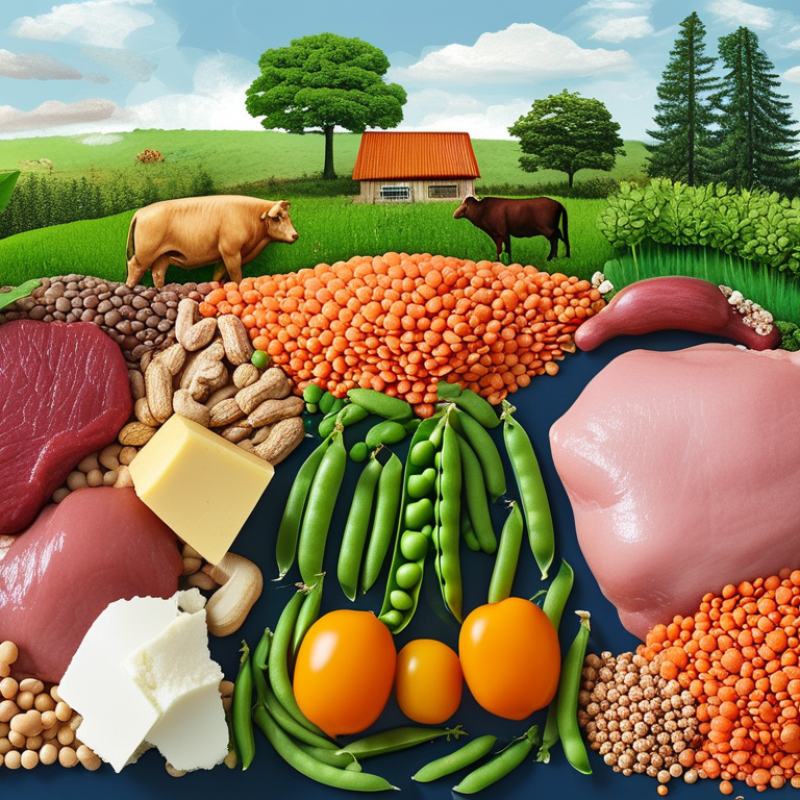
Defining Sustainable Plant-Based and Animal Protein Sources
5 Best Sustainable Vegetal Proteins vs Animal Proteins?
Sustainable protein means more than choosing plants over animals. It considers land, water, emissions, biodiversity, farming methods, and local conditions. Five practical plant-based choices include lentils, beans, peas, tofu, and tempeh. Nuts, seeds, and whole grains also contribute useful protein. Legumes can improve soil fertility by fixing nitrogen, while soy foods provide complete protein with a firm, satisfying texture. However, processing, packaging, transport, and water use still matter.
Animal proteins can fit within a sustainable diet when production is carefully managed. Eggs, poultry, dairy, and responsibly sourced fish usually have different environmental profiles. Grazing systems may support grassland, but poorly managed livestock can damage soil and increase emissions. Fishery sustainability depends on species, habitat protection, and catch controls. Nutrition also deserves attention. Animal foods often provide vitamin B12, highly absorbable iron, and complete amino acids. Plants offer fiber and beneficial compounds, but some nutrients require planning. The “best” choice changes with region, farming practice, and personal health needs.
Tips: Compare serving sizes, not only food categories. Choose beans or lentils several times weekly, then vary textures with tofu, seeds, eggs, or fish. Read sourcing details when available. A lower-impact meal is not automatically perfect. Even a careful plan can overlook seasonal water stress or packaging waste.
5 Best Sustainable Vegetal Proteins vs Animal Proteins? – Defining Sustainable Plant-Based and Animal Protein Sources
| Protein source | Category | Protein per 100 g |
Dietary fiber per 100 g |
Estimated GHG emissions (kg CO₂e per 100 g protein) |
Estimated land use (m² per 100 g protein) |
Sustainability strengths | Key considerations |
|---|---|---|---|---|---|---|---|
| Lentils | Vegetal protein | 9.0 g | 7.9 g | ≈0.8 | ≈3–7 | Low emissions and land demand; improves soil nitrogen when included in crop rotations. | Lower protein density after cooking; soaking or thorough cooking improves digestibility. |
| Tofu | Vegetal protein | 8.1 g | 0.3 g | ≈1.5–2.5 | ≈3–5 | Complete soy protein with substantially lower average emissions and land use than most animal proteins. | Environmental results depend on soybean farming practices, processing energy, and transport. |
| Split peas | Vegetal protein | 8.3 g | 8.3 g | ≈0.4–0.8 | ≈2–5 | Efficient pulse crop with high fiber, low agricultural emissions, and little processing when sold dry. | May cause digestive discomfort for some people; amino-acid balance is improved by varied diets. |
| Chickpeas | Vegetal protein | 8.9 g | 7.6 g | ≈0.7–1.2 | ≈4–8 | Generally low-impact compared with livestock and provides protein, fiber, iron, and folate. | Water requirements can be higher in dry regions; canned products include packaging and cooking impacts. |
| Tempeh | Vegetal protein | 19.9 g | 3.9 g | ≈1.5–2.5 | ≈3–6 | High protein density, fermented digestibility, and much lower average land demand than animal foods. | Requires refrigeration and processing; sodium levels vary by preparation. |
| Animal protein comparison | |||||||
| Eggs | Animal protein | 12.6 g | 0 g | ≈4–5 | ≈5–7 | Complete protein and relatively lower impact than ruminant meat among common animal sources. | Produces more emissions and uses more land than most pulses and soy foods; no dietary fiber. |
| Chicken | Animal protein | 31.0 g | 0 g | ≈5–7 | ≈10–15 | High protein density and generally lower emissions than pork, dairy, or ruminant meat. | Feed production, manure management, welfare, and antibiotic-use practices affect total impact. |
| Pork | Animal protein | 27.0 g | 0 g | ≈7–9 | ≈15–25 | Usually lower impact than beef and lamb on a protein basis. | Feed crops, manure emissions, water pollution, and housing systems are important variables. |
| Farmed fish | Animal protein | 20–25 g | 0 g | ≈4–12 | ≈5–30 | Some species use relatively little land and can convert feed efficiently. | Impacts vary widely by species and system; feed sourcing, disease control, and local water effects matter. |
| Beef | Animal protein | 26.0 g | 0 g | ≈25–60 | ≈100–200+ | Provides complete protein, vitamin B12, zinc, and highly bioavailable iron. | Typically the highest-impact option because of methane emissions, feed requirements, and extensive land use. |
| Notes: Nutrition values are approximate values for edible food as commonly sold or cooked and are based on standard food-composition data. Environmental figures are indicative global-average ranges per 100 g of protein, synthesized from life-cycle assessment results reported in major food-system studies; actual impacts vary with farming system, geography, yield, feed, processing, transport, and land-use change. GHG values include emissions expressed as carbon-dioxide equivalents. “Best” reflects a combination of protein quality, nutrition, fiber, and lower average environmental pressure rather than a single universal ranking. | |||||||
FAQS
Sustainability considers land, water, emissions, biodiversity, farming methods, transport, packaging, and food waste. Local conditions matter. Context matters.
Lentils, beans, peas, tofu, and tempeh are useful options. Nuts, seeds, quinoa, and whole grains also contribute protein. Lentils and beans may support soil fertility.
Not necessarily. Eggs, poultry, dairy, and responsibly sourced fish can fit within a lower-impact diet. Poorly managed livestock can damage soil and increase emissions.
Soy foods and quinoa contain relatively complete amino acid profiles. Lentils, chickpeas, peas, and beans may provide less methionine. Combining legumes with grains can improve balance.
The adult reference amount is about 0.8 grams per kilogram of body weight daily. Active adults may need more. Individual needs vary.
Lentils, beans, peas, tofu, and seitan generally use less land and create fewer emissions than beef or lamb. Tofu still requires energy. Usually, not always.
Fish can be efficient in some systems. Results depend on species, habitat protection, fuel use, and catch controls. Overfishing can cause serious damage.
Replace a few weekly beef servings with lentils, peas, tofu, or beans. Vary textures with eggs, seeds, or fish. Small changes count.
No. Irrigation, transport, packaging, farming methods, and waste can change the result. A local bean crop may still use substantial water. Comparisons remain imperfect.
Compare serving sizes, not only food categories. Include fiber-rich plants and nutrient-dense foods. Vitamin B12 and absorbable iron may require careful planning. Professional advice can help.
Conclusion
This article explores how sustainable plant-based and animal protein sources compare across nutrition, environmental impact, health, and dietary suitability. It defines vegetal proteins such as legumes, grains, nuts, seeds, and certain fungi, then contrasts them with animal sources based on protein quality, amino acid balance, digestibility, and essential nutrients. Rather than treating one category as universally superior, the discussion explains how preparation, farming practices, portion sizes, and overall diet influence sustainability and nutritional value.
It also asks, “how sustainable are vegetal proteins compared to animal proteins,” by examining land use, water consumption, greenhouse-gas emissions, biodiversity, and resource efficiency. Plant proteins often require fewer resources, while some animal proteins can provide highly concentrated nutrients and complete amino acid profiles. The article considers potential health benefits and risks, including fiber intake, saturated fat, allergies, and nutrient gaps, before offering practical guidance for different needs. A balanced, varied diet can support both personal health and more responsible use of environmental resources.
