How to Source Organic Vegetal Proteins from Top Suppliers?

Time:2026-10-08 Author:Oliver
0%

Demand for organic vegetal proteins is moving from niche shelves into mainstream food manufacturing. FiBL and IFOAM Organics International reported that global organic food sales reached approximately €135 billion in 2022. The report also recorded more than 4.5 million organic producers worldwide. These figures reveal opportunity, but they also expose sourcing complexity.

The Good Food Institute’s State of the Industry report showed that U.S. retail plant-based foods generated about $8.1 billion in 2023. Plant-based protein is no longer a simple commodity purchase. Buyers must examine crop origin, organic certification, protein concentration, allergen controls, processing conditions, and supply continuity. Dr. David Julian McClements, a food science professor and plant-based formulation expert, has stated, “The future of food is plant-based.” His view supports a broader shift toward transparent, scientifically designed ingredients.

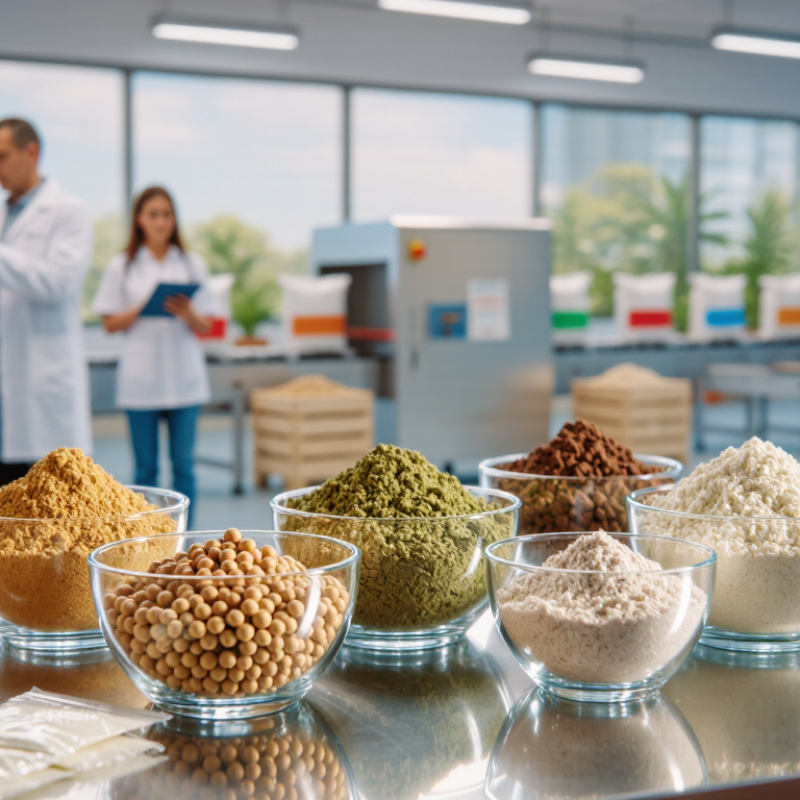
This guide explains how to source organic vegetal proteins from qualified suppliers. It focuses on practical verification, not attractive brochures. Ask for current certificates, laboratory analysis, traceability records, and recent audit results. Check whether the certificate covers the exact facility and product batch. Soy, pea, rice, hemp, and fava proteins behave differently in texture, flavor, and water absorption.

Some supplier websites look convincing. They are not evidence. A low price may hide unstable harvests, weak testing, or long delivery routes. In my experience, sample approval should include a real production trial, not only a small laboratory test. Even careful sourcing can fail when forecasts are unrealistic. That uncomfortable point deserves attention. Reliable procurement requires technical review, documented communication, and a willingness to reject convenient but poorly verified offers.
How to Source Organic Vegetal Proteins from Top Suppliers?

Define Organic Protein Standards Under USDA NOP and EU Regulation 2018/848

Sourcing organic vegetal proteins begins with a legal definition, not a supplier brochure. Under USDA NOP, crops must avoid prohibited substances for at least three years before harvest. Processed products labeled “organic” generally require at least 95% certified organic ingredients. “Made with organic” requires at least 70%, with stricter wording limits. Suppliers should provide a current organic certificate, ingredient list, processing scope, and lot-level traceability.

EU Regulation 2018/848 uses similar principles but applies different control systems and labeling rules. Each operator needs certification from an approved control body. Products using the EU organic logo must meet the regulation’s ingredient, production, and origin requirements. Check the control-body code and agricultural-origin statement on every shipment. This matters for pea, soy, rice, hemp, and mixed protein powders, where processing aids can change compliance status. A certificate alone is not enough.

The market is expanding. FiBL and IFOAM Organics International reported approximately €135 billion in global organic retail sales in 2022. That growth increases documentation pressure. During supplier reviews, buyers should compare certificates against the exact factory address, product name, and production date. Request residue-testing policies, allergen controls, cleaning records, and chain-of-custody evidence. Some teams still accept outdated certificates. That is a weak practice. USDA and EU approvals are not automatically interchangeable, and equivalence assumptions can create costly relabeling or rejected shipments. Keep a written gap assessment for each market. Mistakes happen, especially when one supplier uses several processors.

Assess Market Potential Using OTA’s $67.6B U.S. Organic Sales in 2023

The Organic Trade Association reported $67.6 billion in U.S. organic sales in 2023. This figure signals strong consumer interest in organic food, including plant-based proteins. However, total organic sales do not equal protein demand. Buyers should treat the number as market context, not a guaranteed forecast.

Supplier research should connect market data with physical evidence. Request current organic certificates, facility addresses, batch records, and allergen controls. Check whether certification covers the finished protein ingredient, not only the farm. Pea, soy, rice, and pumpkin seed proteins can vary in taste, solubility, and amino acid balance. A small sample can reveal more than a polished presentation.

Ask suppliers for recent laboratory results, pesticide testing, heavy metal limits, and microbial reports. Also review harvest timing, storage conditions, minimum order quantities, and backup supply plans. In practical sourcing work, traceability often breaks at transport or secondary processing. That weakness deserves attention.

The $67.6 billion figure supports a serious sourcing strategy, but it should not replace customer research. Compare prices across regions, test formulations with real users, and measure repeat purchases. Some organic proteins carry a strong earthy flavor. That may reduce acceptance, even when the ingredient meets every certification requirement. A careful buyer should document these trade-offs instead of hiding them.

Screen Suppliers Through Certification, COAs, and Traceability Audits

How to Source Organic Vegetal Proteins from Top Suppliers?

The Good Food Institute’s 2024 State of the Industry report valued global plant-based retail sales at approximately $29.4 billion in 2023. Growth increases sourcing pressure. Organic claims, however, require more than a polished certificate.

Request the organic certificate before approving samples. Check its issuing body, scope, facility address, product category, and expiry date. The certificate must cover the actual processing site, not only a trading office. Then examine each batch’s Certificate of Analysis. Essential fields include protein content, moisture, microbiological results, pesticide screening, heavy metals, allergens, and lot identification. Compare test methods and laboratory accreditation. A number without methodology is weak evidence.

Traceability audits should connect the finished powder to the farm, harvest lot, processor, transport record, and storage location. Ask suppliers to perform a mock recall. Can they identify affected lots within hours? Review mass-balance records for organic materials. Confirm segregation from conventional ingredients through receiving, production, cleaning, and dispatch. The United Nations Food and Agriculture Organization repeatedly identifies traceability as a core control for food safety and supply-chain resilience. Still, paperwork can hide practical gaps. I would inspect one shipment physically, photograph seals, and reconcile weights against records. A passed audit is not permanent proof. Supplier performance changes, and auditors can miss quiet failures. Keep testing risk-based and independent.

Compare Protein Quality Using FAO’s DIAAS Evaluation Framework

When sourcing organic vegetal proteins, do not judge quality by protein percentage alone. FAO’s DIAAS framework offers a more useful comparison. It measures the digestibility of indispensable amino acids at the end of the small intestine. This matters because the body absorbs individual amino acids, not crude protein totals. A supplier should provide amino acid results, digestibility data, test methods, and the reference pattern used. The limiting amino acid deserves close attention. For many plant proteins, sulfur-containing amino acids or lysine may reduce the final score. Numbers can mislead.

Ask suppliers for batch-specific certificates and evidence of controlled processing. Heating, milling, and storage can change digestibility. Organic certification confirms production requirements, but it does not automatically prove a high DIAAS value. I would compare similar ingredients under the same age-specific FAO reference pattern. Infants, children, and adults do not share identical nutritional needs. DIAAS values are also affected by laboratory design and sample preparation. That uncertainty should appear in your purchasing notes, not disappear in a sales spreadsheet.

A practical review can begin with three samples: protein concentrate, isolate, and a minimally processed flour. Record moisture, amino acid levels, digestibility, origin, and harvest-year information. Then check whether the supplier’s data comes from an independent laboratory. Request retained samples when possible. Small details matter. I have seen attractive specifications hide incomplete testing. A transparent supplier will explain missing data instead of promising perfection. Protein quality should be verified, not assumed.

How to Source Organic Vegetal Proteins from Top Suppliers? - Compare Protein Quality Using FAO’s DIAAS Evaluation Framework
Protein ingredient Botanical source Typical protein form Primary limiting amino acid Indicative DIAAS* Quality interpretation Organic sourcing checkpoints Key specification to request Common formulation use Complementary protein option
Soy protein isolate Soybean (Glycine max) Isolate, typically ≥90% protein on a dry basis Methionine and cysteine ≈0.90–0.95 High-quality plant protein; usually below the adult reference pattern for sulfur amino acids. Organic certificate, non-GMO documentation, solvent and allergen controls, traceability by lot. Protein assay, amino-acid profile, digestibility method, urease activity and antinutrient data. Shakes, beverages, nutrition powders and meat alternatives. Combine with a grain protein to improve sulfur-amino-acid balance.
Pea protein isolate Yellow pea (Pisum sativum) Isolate, commonly 80–85% protein on a dry basis Methionine and cysteine ≈0.75–0.85 Moderate-to-high quality; digestibility and processing conditions can materially affect the result. Organic field certificate, pesticide-residue compliance, country-of-origin records and allergen statement. Protein content, particle size, solubility, off-flavour profile and amino-acid digestibility data. Plant-based beverages, bars, powders and emulsified products. Pair with rice or oat protein for a broader amino-acid profile.
Potato protein isolate Potato (Solanum tuberosum) Purified protein fraction, often produced from potato juice Methionine and cysteine may be limiting depending on the reference pattern ≈0.95–1.00+ Potentially very high amino-acid quality; published values vary with cultivar, extraction and test protocol. Organic crop documentation, processing-aid declaration, heavy-metal testing and supply continuity. Protein purity, solubility, thermal stability, bitterness and validated digestibility results. High-protein blends, sports nutrition and specialty nutrition products. Use with legume proteins when a more balanced blend is required.
Rice protein concentrate Rice (Oryza sativa) Concentrate, commonly 60–80% protein on a dry basis Lysine ≈0.55–0.70 Lower DIAAS potential when used alone because lysine is relatively low. Organic grain certificate, arsenic and heavy-metal testing, milling controls and geographic traceability. Total protein, inorganic arsenic, amino-acid profile, microbiology and sensory quality. Hypoallergenic blends, bars, baked goods and dairy-free powders. Combine with pea or soy protein to raise lysine adequacy.
Faba bean protein concentrate Faba bean (Vicia faba) Concentrate or isolate, depending on the extraction process Methionine and cysteine ≈0.60–0.75 Moderate quality; tannins, vicine/convicine and processing can influence nutritional performance. Organic certification, variety information, vicine/convicine specification and allergen controls. Protein purity, tannin level, vicine/convicine, solubility and digestibility testing. Meat alternatives, soups, bakery products and savoury formulations. Blend with a methionine-rich grain or seed protein.
Chickpea protein concentrate Chickpea (Cicer arietinum) Concentrate or isolate Methionine and cysteine ≈0.70–0.85 Moderate-to-high quality; values depend on cultivar, protein fraction and digestibility measurement. Organic certificate, pesticide-residue panel, allergen declaration and crop-year consistency. Protein content, oligosaccharides, trypsin-inhibitor activity, solubility and flavour profile. Hummus-style foods, snacks, bakery products and plant-based blends. Combine with rice protein to improve the overall amino-acid pattern.
Hemp seed protein concentrate Hemp (Cannabis sativa) Defatted seed concentrate or powdered seed protein Lysine, and sometimes leucine depending on the product ≈0.45–0.65 Useful as a functional ingredient but generally less efficient as a sole protein source. Organic seed certificate, THC compliance where applicable, heavy metals, pesticide residues and rancidity controls. Protein and fat content, peroxide value, fatty-acid profile, microbiology and amino-acid analysis. Smoothies, nutrition bars, cereals and clean-label products. Blend with pea or soy protein to improve lysine density.
Wheat gluten Wheat (Triticum aestivum) Vital wheat gluten, typically ≥75% protein on a dry basis Lysine ≈0.25–0.45 Low DIAAS potential as a stand-alone protein, despite strong dough-forming functionality. Organic wheat certificate, gluten allergen controls, mycotoxin testing and wheat-variety traceability. Protein content, gluten strength, moisture, mycotoxins, microbiology and allergen documentation. Seitan, bakery products and structured plant-based foods. Combine with legumes that are richer in lysine.
* DIAAS context: DIAAS is calculated from the ileal digestible indispensable amino-acid content of a protein relative to the FAO reference pattern. The ranges shown are indicative values reported across published studies and may change with cultivar, growing conditions, protein purity, heat treatment, antinutrient removal, test age group and analytical method. They are not supplier-specific specifications. Values above 1.00 may be reported because DIAAS is not necessarily truncated at 100.
Procurement note: Organic certification confirms the production standard but does not, by itself, establish protein quality. For supplier comparison, request a recent certificate of analysis, amino-acid profile, ileal digestibility or validated DIAAS study, contaminant results, processing details and lot-level traceability.

Secure Supply with MOQ, Lead-Time, Incoterm, and HACCP Reviews

Sourcing organic vegetal proteins starts with a supplier conversation, not a product brochure. Ask for the organic certificate, specification sheet, allergen statement, and recent microbiological results. Check protein content, moisture, solubility, flavor, particle size, and country of origin. A practical sample test should include water temperature, mixing time, sediment, and aftertaste. Small details often reveal production differences.

MOQ can shape the entire purchasing plan. Request separate quantities for samples, pilot orders, and regular production. A low MOQ may carry higher pricing or limited batch flexibility. Confirm whether the supplier can reserve raw materials during seasonal shortages. Lead time must cover production, testing, documentation, and transport. Ask for a realistic timeline, not only the fastest estimate. Add safety stock for delays at ports or during certification reviews. We once treated a quoted lead time as fixed. That was too optimistic.

Incoterms should match your logistics experience and cash flow. Under FOB, the buyer usually manages main transport after loading. Under DDP, the seller handles more delivery duties, but responsibilities must be verified carefully. Confirm the named place, insurance coverage, customs documents, and risk-transfer point in writing. HACCP review also needs evidence. Request the hazard analysis, critical control points, corrective-action records, sanitation procedures, and traceability test results. If a supplier cannot explain how one lot moves from intake to dispatch, pause the approval. Certificates alone are not enough. Supplier audits, batch records, and retained samples provide stronger confidence. Mistakes still happen, so leave room for corrective action.

How to Source Organic Vegetal Proteins from Top Suppliers?

Reference procurement ranges for evaluating MOQ, lead time, Incoterm readiness, and HACCP documentation before securing supply.

Typical commercial benchmarks vary by protein type, processing format, origin, certification status, and annual volume. Confirm the final MOQ, production schedule, Incoterm, HACCP plan, and lot-level documentation directly with each qualified supplier.

FAQS

What documents should an organic protein supplier provide?

Request a current organic certificate, ingredient list, processing scope, and lot-level traceability records. Check the exact factory address and product name. A certificate alone is not enough.

How can buyers verify organic certification for different markets?

Compare the certificate with the destination market’s organic rules. Check the control-body code, origin statement, production date, and covered facility. Do not assume approvals transfer automatically.

What percentage of organic ingredients may a product need?

Some organic labeling categories require at least 95% certified organic ingredients. A lower category may require at least 70%. Wording restrictions can still apply.

Which plant proteins require close technical checking?

Pea, soy, rice, hemp, and pumpkin seed proteins may differ greatly. Check taste, solubility, protein content, particle size, and amino acid balance. Small samples expose real problems.

What should a practical sample test include?

Mix the powder with water at a defined temperature. Record mixing time, sediment, texture, and aftertaste. The earthy flavor may disappoint users.

What laboratory records should buyers request?

Ask for recent pesticide, heavy-metal, microbial, and allergen-control records. Review cleaning procedures and retained samples. Old reports may not describe the current batch.

How should buyers evaluate minimum order quantities and lead times?

Request separate quantities for samples, pilot production, and regular orders. Confirm production, testing, documentation, and transport time. Add safety stock for port delays. Our earlier estimate was too optimistic.

What should be reviewed before approving a supplier’s logistics plan?

Confirm the delivery term, named place, insurance, customs documents, and risk-transfer point. Clarify who manages transport after loading. Written details prevent expensive confusion.

What evidence supports a meaningful food-safety review?

Request hazard analysis, critical control points, corrective actions, sanitation records, and traceability tests. Ask the supplier to trace one lot from intake to dispatch. If the explanation feels vague, pause approval.

Conclusion

Sourcing high-quality organic vegetal proteins requires a structured approach that combines regulatory knowledge, market analysis, supplier verification, and logistical planning. The process begins by defining organic standards under the USDA National Organic Program and EU Regulation 2018/848, ensuring that ingredients meet recognized requirements for production, processing, and handling. With U.S. organic sales reaching $67.6 billion in 2023, the market offers strong potential for manufacturers seeking reliable plant-based protein ingredients.

To determine how to source organic vegetal proteins effectively, buyers should evaluate suppliers through valid certifications, detailed certificates of analysis, and traceability audits covering raw materials and processing sites. Protein quality can be compared using the FAO’s DIAAS framework, which considers amino acid composition and digestibility. Finally, purchasing decisions should address minimum order quantities, lead times, Incoterms, food safety systems such as HACCP, and contingency planning to support consistent supply, regulatory compliance, and long-term business stability.

Oliver

Oliver

Oliver is a seasoned marketing professional with a wealth of expertise in driving brand awareness and engagement. With a deep understanding of our company's product offerings, he consistently delivers high-quality content that enriches our professional blog. His insights not only shed light on......